
What Time Magazine’s “Architects of AI” Reveals About Diversity, Equity, and the Future of Talent
Dr. Marcia F. Robinson is a senior certified HR professional, diversity strategist, and curator of TheHBCUCareerCenter.com. She advises organizations on building inclusive talent pipelines and improving diversity recruiting outcomes.
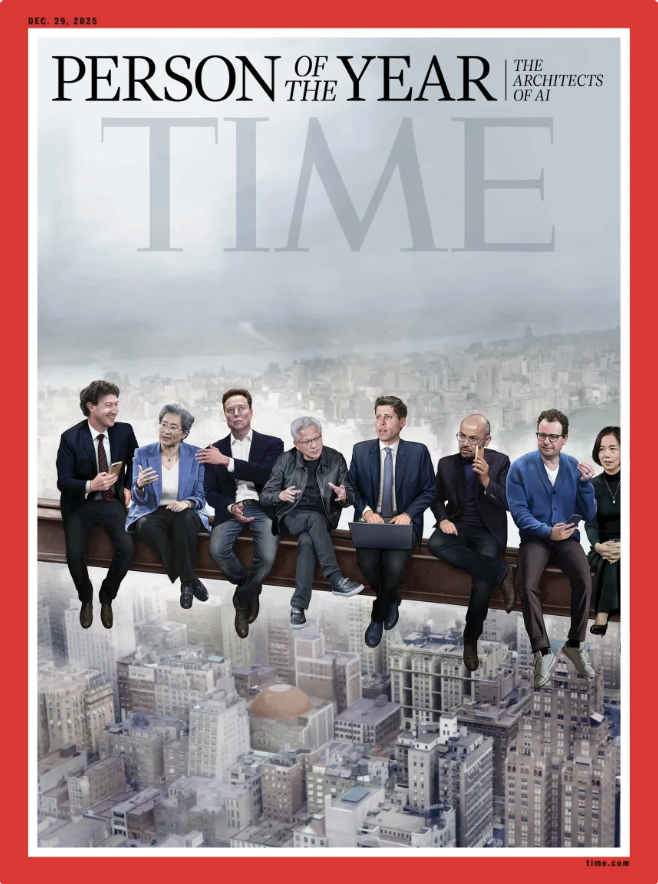
When Time named the “Architects of AI” as its 2025 Person of the Year, it wasn’t just a nod to this technology that is disrupting lives. It was a snapshot of who we continue to elevate as the builders of the future—and who we still struggle to see.
On the surface, the 8-person group reflects a familiar Silicon Valley narrative: eight leaders, mostly men, most running or founding high-profile technology companies. But look a little closer and the composition tells a more complicated story about diversity, equity, and inclusion (DEI) in America’s innovation economy.
Five of the eight honorees—62.x5%—are foreign-born. Four are immigrants. That’s not an accident. U.S. technology leadership has long depended on global talent. Immigrants and children of immigrants have powered our most transformative industries, from semiconductors to AI.
A National Bureau of Economic Research study shows that immigrants routinely play a disproportionately large role in U.S. innovation, producing a high share of patents and contributing significantly to overall innovation output—despite being a smaller share of the inventor population. Immigrants produced roughly 23–24 % of U.S. patents, far above their share of inventors, reflecting outsized influence in technology and related sectors like AI and semiconductors.
This reinforces a truth many CHROs know but rarely say plainly: a major American workforce advantage has always been the global mobility of humans. The resulting innovative collaborations of diverse groups of people across the American workplace who coalesce around ideas.
How do we reconcile this information in the current political environment with all the negativity about immigrants, DEI initiatives and the perils of globalism?
And yet, while national origin diversity is evident among these architects of AI, other dimensions of diversity lag.
Only two women appear in the group. No Black leaders. No HBCU graduates, that is, no one whose pathway ran through the institutions that disproportionately educate first-generation, low-income, and underrepresented talent in this country.
That’s not a criticism of the individuals.
This is more a reflection of the systems that shape access to capital, networks, elite research pipelines, and early career opportunities in technology fields.
AI did not suddenly emerge in 2025; it is the product of decades of education, sponsorship, and investment decisions that consistently favored the same profiles and institutions.
As a CHRO and as the founder of The HBCU Career Center, I see this as both a warning and an opportunity.
If AI is truly redefining work, then the next generation of architects must come from a broader set of classrooms—including HBCUs.
These institutions have a known history of producing exceptional talent in cybersecurity, data science, engineering, healthcare, and business. We know well that what HBCU graduates lack is not ability or talent, but equitable access and exposure to internships, research funding, mentorship and executive sponsorship.
DEI in the AI era cannot stop at hiring pledges or representation dashboards. It must show up earlier—in who we recruit, where we recruit, and whom we BELIEVE can contribute ideas and know-how to build a future where human inclusion will still matter.
The next Time Magazine cover should not look like progress by coincidence – It should look like progress through the design of inclusive work spaces where inter-disciplinary thinking is celebrated and leadership can rise up from anywhere and anyone. The US has the opportunity to own that future, but not if we let small-minded people retell and reshape the true American story of innovation.